



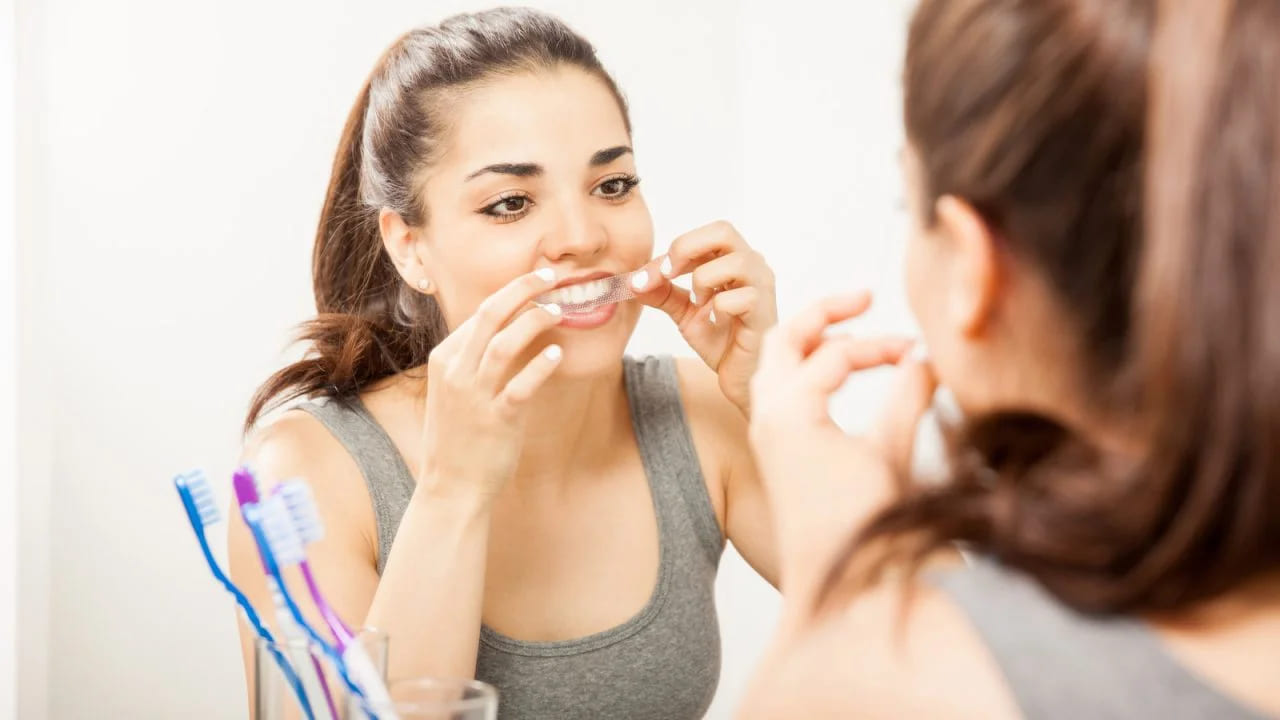
The desire for a brighter smile often leads many people to explore teeth whitening options. Among these, whitening strips have become popular because they are convenient and affordable. However, a common question people ask is “Do I brush my teeth before using whitening strips?”
In this blog, we’ll explain how teeth whitening strips work and recommended the best oral hygiene practices like when to brush your teeth when using strips to help improve their effectiveness and keep your smile healthy.
How Do Whitening Strips Work On Teeth?
Teeth whitening strips are thin and flexible strips coated with a gel that contains a bleaching agent, such as hydrogen peroxide or carbamide peroxide. They are a simple and convenient at-home option for achieving a brighter smile. When placed on your upper and lower teeth, the gel gently penetrates the enamel and helps break down surface stains. For safe and effective results, it’s important to follow the instructions carefully, as overuse may lead to tooth sensitivity or gum irritation, or potential damage.
- Also Read: Why No Dairy After Dental Implant?
- Also Read: How to Stop Tooth Pain Fast?
Should You Brush Before Whitening Strips?
The answer is yes – you can and should brush your teeth before using whitening strips. Pre-brushing helps remove plaque and residual food particles, creating a clean surface for the whitening strips to work more effectively. However, it is advisable to wait at least 30 minutes after brushing your teeth before applying whitening strips. This helps reduce the risk of tooth sensitivity and protects your enamel.
Here are some key guidelines to consider:
- Use a soft-bristle toothbrush to avoid gum irritation and discomfort.
- Consider using fluoride toothpaste to strengthen the enamel.
- Do not brush too hard, as this can make your teeth more sensitive when using whitening strips
- Consult with your dentist for personalised guidance based on your oral health.
Oral Care Tips to Improve Whitening Strip Results
Maintaining good oral hygiene is important for keeping your smile healthy and helping whitening strips work more effectively.
Here are some simple daily habits to follow:
- Avoid brushing immediately after removing whitening strips to reduce sensitivity.
- Brush your teeth regularly with a soft-bristle toothbrush and floss consistently.
- Wait about 20–30 minutes after brushing your teeth before applying strips.
- Avoid foods and drinks that can stain your teeth, like coffee, tea, and soft drinks.
- Steer clear of smoking and limit the use of sugary or tobacco products.
- Stay hydrated by drinking plenty of water to improve overall oral health.
Before starting any at-home whitening treatment, it’s best to consult your Oxenford dentist for personalised advice and safe care.
Conclusion:
Teeth whitening strips can be an effective solution for achieving stain-free teeth at home. Brushing your teeth before applying whitening strips is recommended for optimal results, as a clean tooth surface allows the whitening gel to work more efficiently. However, it is important to follow the recommended waiting period of at least 30 minutes after brushing to reduce the risk of tooth sensitivity and gum irritation. Maintaining good oral hygiene practices and seeking professional advice from a dentist can help you achieve a healthier and brighter smile.
- Also Read: How To Get Rid Of Tooth Pain?
- Also Read: How To Help Wisdom Tooth Pain?
Frequently Asked Questions:
- Can over-brushing before using whitening strips harm my teeth? Yes, overbrushing can damage your teeth by wearing down the enamel. While it’s safe to brush before using whitening strips, brushing too hard or too often may cause sensitivity. Always use a soft-bristle toothbrush and brush gently.
- Are whitening strips safe to use? Whitening strips are safe when used correctly and according to the instructions. However, overuse or misuse may lead to tooth sensitivity or gum irritation. Following the guidelines carefully will help you achieve the best results.
- If I have sensitive teeth, should I also brush my teeth before applying whitening strips? If you have sensitive teeth, it’s best to consult a dental professional for personalised advice. A dentist can recommend specific brushing techniques to help reduce sensitivity during the whitening process.
Disclaimer: The information provided in this blog is for informational purposes only and is not intended as medical advice. It is essential to consult with a qualified dental professional or healthcare provider for advice tailored to your specific oral health needs. Any reliance on the information provided in this blog is at your own risk. The authors and publishers of this blog are not responsible for any consequences that may arise from the use of the information herein. Always seek the guidance of your dentist or healthcare provider for accurate and personalised information regarding your dental health.