



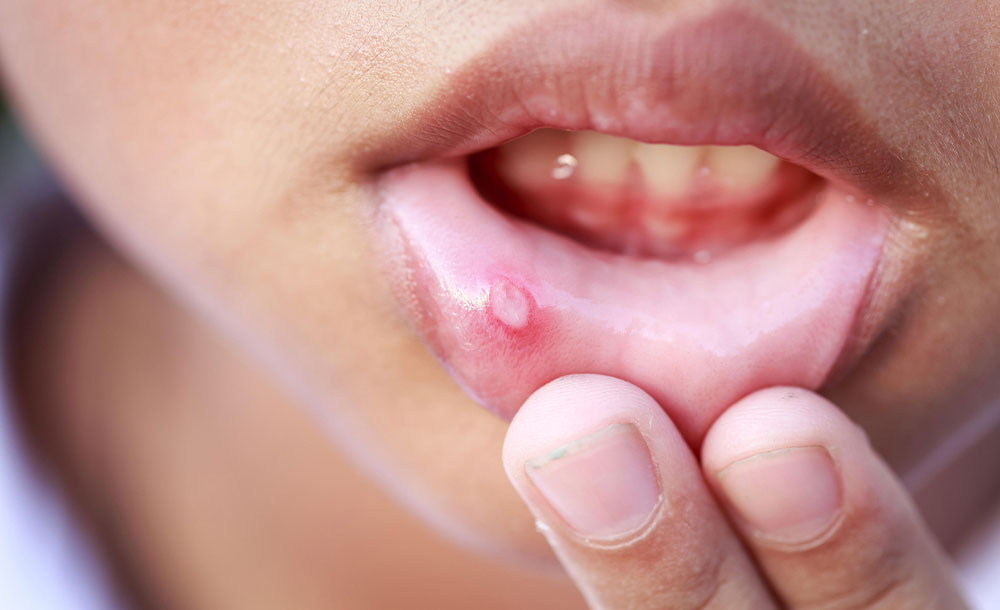
If you have noticed a white or grey patch inside your cheek, tongue, or gums that has not gone away after a week or two, this article explains what might be happening. Most white patches are harmless, caused by things like a bitten cheek or a minor infection. Some patches, however, are leukoplakia, a thickened patch that does not rub off and occasionally needs closer monitoring, since a small number are linked to oral cancer. Below, we cover the causes, warning signs, and when to see a dentist.
What Is Leukoplakia?
Leukoplakia is a white or greyish patch that forms inside the mouth and cannot be wiped or scraped away. It usually appears on the inside of the cheeks, on the tongue, or along the gums, and sometimes on the floor of the mouth.
The main thing that separates it from an everyday mouth mark is how long it sticks around. A burn from a hot drink or an accidental cheek bite usually heals within a few days, while leukoplakia stays in place for weeks and can slowly thicken rather than fade away.
Because it does not heal by itself, it is worth checking properly. Most patches turn out to be harmless once examined, but a small percentage contain cells that have started changing abnormally, so a professional opinion is the only reliable way to know which type you have.
What Causes Leukoplakia?
Leukoplakia usually develops after the mouth’s soft tissue is irritated repeatedly, causing it to thicken as a protective response. It is rarely caused by just one thing, and often a combination of habits plays a part.
-
Tobacco Use and Smoking
Tobacco is widely recognised as the biggest contributing factor. Whether smoked or chewed, it repeatedly irritates the mouth’s lining, often causing a patch where it rests against the gum or cheek.
-
Excessive Alcohol Consumption
Drinking regularly and heavily can also irritate the delicate tissue inside the mouth. Combined with smoking, the effect is far greater than either habit alone.
-
Chronic Irritation from Teeth, Fillings, or Dentures
A sharp tooth, a high filling, or an ill-fitting denture can rub against the same spot every day. Fixing the source of the rubbing often allows the area to heal naturally.
-
Poor Oral Hygiene
When plaque builds up and gum disease is left untreated, the mouth stays inflamed, which can make a patch more likely to develop.
-
Human Papillomavirus (HPV) and Other Contributing Factors
Certain HPV strains and a weakened immune system may play a part. In some cases, no clear cause is ever found. This is one more reason not to dismiss a patch simply because you can’t explain it.
Common Signs and Symptoms of Leukoplakia
The most common sign is a white or greyish patch on the cheeks, tongue, or gums. It rarely causes pain, which is why many people do not notice it for some time.
Signs to look out for include:
- A white or grey patch that cannot be wiped off
- An area that feels thicker, rougher, or slightly leathery than the surrounding tissue
- A patch that does not heal the way an ulcer or minor burn would
- A patch that is still present after two weeks
- Speckled red-and-white patches, which are generally treated as a higher priority
Leukoplakia Compared to Other Causes of White Patches
Several other conditions can look similar to leukoplakia. Telling them apart matters, because each one is managed differently.
| Condition | Key feature | Does it rub off? |
| Leukoplakia | Thickened white or grey patch that persists for weeks | No |
| Oral thrush | Fungal infection causing white patches | Yes, usually |
| Canker sores | Small, painful ulcers with a white or yellow centre and red edge; heal within one to two weeks | Not applicable (ulcer, not a patch) |
| Frictional keratosis | White patch caused purely by ongoing rubbing, such as cheek biting; fades once friction stops | No, but resolves once the cause is removed |
| Oral lichen planus | Long-term condition with lacy white lines, often on both cheeks; may cause soreness or burning | No |
Is Leukoplakia a Sign of Oral Cancer?
Leukoplakia itself is not cancer, and most patches never turn into cancer. However, because a small number of cases develop abnormal cell changes over time, dentists treat it as worth monitoring rather than dismissing straight away.
Certain features raise more concern:
- Red-and-white speckled patches
- Patches on the floor of the mouth or underneath the tongue
- Patches in heavy smokers or drinkers
- Any patch that visibly changes over time
This is why early detection matters, because changes picked up early are usually simpler to treat.
How Dentists Diagnose Leukoplakia
Diagnosing leukoplakia generally involves the following steps:
-
Comprehensive Oral Examination
A thorough visual and physical check of your whole mouth, assessing the size, colour, texture, and location of any patch.
-
Medical and Lifestyle History
Your dentist will ask about your general health, lifestyle, and how long the patch has been present. These details help point to the underlying cause.
-
Monitoring Changes Over Time
Low-risk patches may be photographed and reviewed at follow-up visits, so any change can be spotted and assessed early.
-
Biopsy When Clinically Indicated
If a patch looks suspicious or doesn’t resolve, a small tissue sample may be taken. A biopsy confirms the diagnosis and checks for abnormal cells.
Treatment Options for Leukoplakia
Treatment depends on how the patch looks and how it responds over time:
-
Eliminating Risk Factors
The most effective step is often the simplest. Stopping tobacco and cutting back on alcohol can help a patch improve or disappear on its own.
-
Regular Monitoring and Follow-Up
Stable, low-risk patches are frequently managed with ongoing monitoring and scheduled reviews rather than active treatment.
-
Managing Chronic Oral Irritation
If a rough tooth, a worn filling, or an ill-fitting denture is causing the irritation, your dentist can correct it. Removing the source often allows the tissue to heal.
-
Surgical or Laser Removal for High-Risk Lesions
If a patch is high risk, surgical or laser removal may be recommended. The removed tissue can then be examined more closely.
Can Leukoplakia Be Prevented?
There are several everyday habits that genuinely lower your risk:
- Avoid all forms of tobacco, including smokeless tobacco.
- Reduce alcohol consumption, particularly if you also smoke.
- Brush twice a day and clean between your teeth.
- Schedule routine dental check-ups so early changes are caught in time.
- Fix ill-fitting dentures or damaged teeth as soon as you notice a problem.
When Should You See a Dentist?
Book an appointment if you notice any of the following:
- A white patch that has lasted longer than two weeks
- A mouth sore that will not heal
- A patch that changes in colour or texture
- Pain, bleeding, or difficulty swallowing
A prompt assessment is the best way to stop a small problem becoming something more serious.
How JJ Smiles Dental Can Help
At JJ Smiles Dental, every check-up includes a full examination of your entire mouth, not just your teeth, because conditions like leukoplakia often develop in places that cause no pain and are easy to miss.
Our approach includes:
- Comprehensive oral examinations – as part of every check-up
- Early detection of abnormal changes – while they are still small and easy to manage
- Personalised treatment planning – built around your individual situation rather than a one-size-fits-all method
With decades of combined clinical experience and modern diagnostic tools, our team can track changes accurately and support your long-term oral health.
Noticed a patch that has not healed? Book an appointment online or call us on (07) 5529 7567 for a thorough oral examination.
Summary
Leukoplakia is marked by persistent white or grey patches that cannot be wiped away. Most cases are harmless, particularly once the underlying cause is addressed, but a small number require closer investigation. Early diagnosis protects your long-term oral health, and regular check-ups give you the best chance of catching changes before they become serious.
Frequently Asked Questions
- Are white patches in the mouth always leukoplakia?
No. They can be caused by conditions such as oral thrush, canker sores, friction, or lichen planus. Only a professional assessment can confirm which one you have. - Can leukoplakia go away without treatment?
Sometimes. Many patches improve once the cause is removed, such as quitting tobacco or fixing a rough tooth. Even so, any patch should be assessed, since a small number need closer monitoring or a biopsy. - Is leukoplakia always linked to oral cancer?
No. It is not cancer, and most patches never become cancerous. It is monitored because a small percentage can change over time. - When should I see a dentist about white patches in my mouth?
See a dentist if a patch lasts longer than two weeks, will not heal, changes in colour or texture, or if you have pain, bleeding, or difficulty swallowing.
This article is intended for general information purposes only and does not replace a professional dental examination or diagnosis. If you are concerned about a white patch in your mouth, please book an appointment with a qualified dentist for an accurate assessment.